
A reading nook you will want to use every day
Compare three reading-nook positions and trial the seat, light and space for your book before buying furniture or commissioning a built-in bench.
A reading nook earns its place when opening a book does not require preparing half the room. The most photogenic chair may be awkward for turning pages, while a window you love in the morning may offer little help with your evening reading.
For your home in Spain, begin with when and how you read. Bring seating, light and a place for belongings together around that habit.
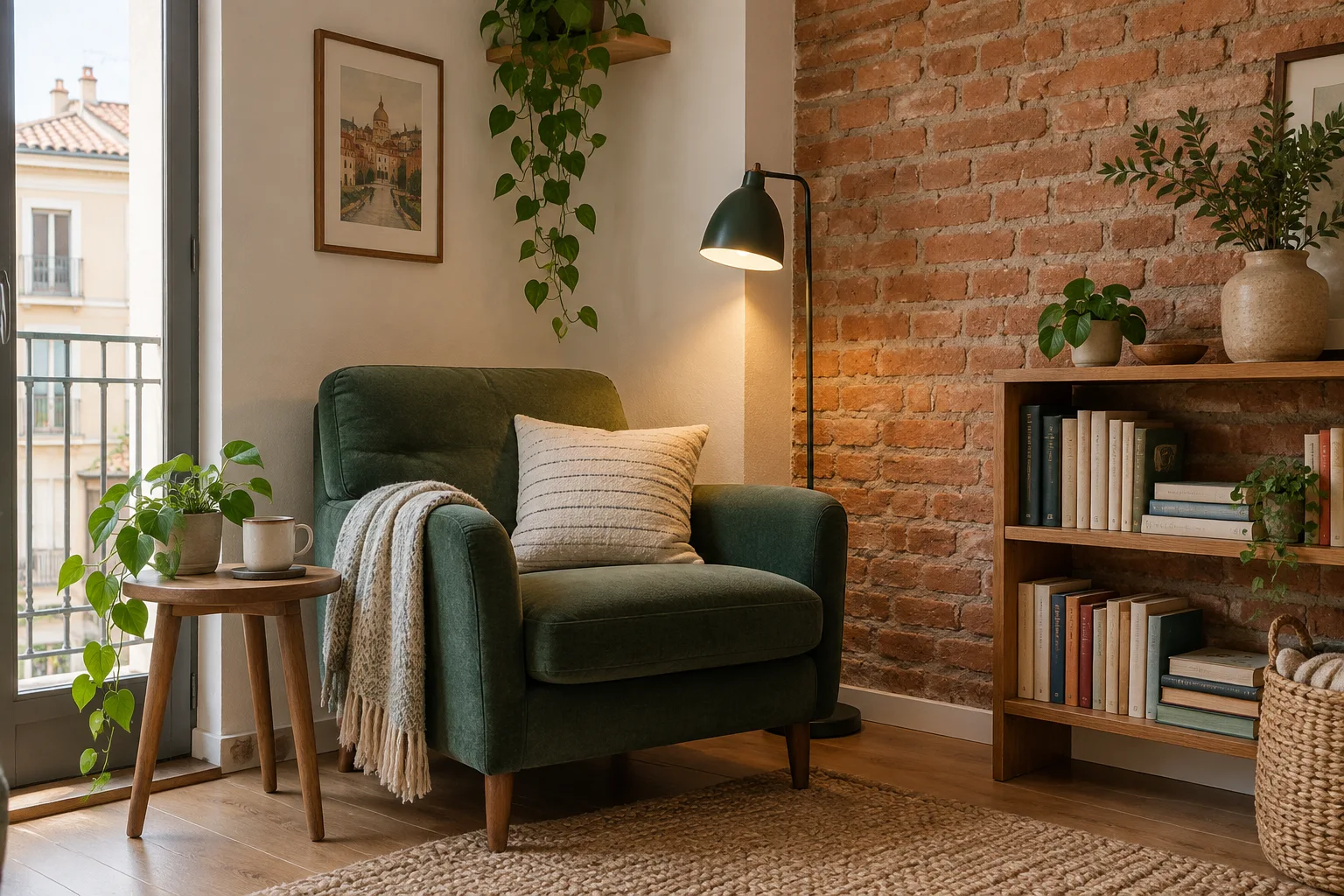
Describe your usual reading session
Note whether you use printed books, an e-reader or both. Include book size and whether you take notes. Think about others sharing the room: you may enjoy company or want distance from conversation and screens. A dedicated corner can be an end of an existing sofa; it does not require a separate room.
Choose a usual reading time and one essential condition, such as switching off without standing up. If the seat changes important routes, revisit the living-room layout before adding accessories to the nook.
Compare three positions using the same book
These are illustrative proposals, not completed projects. Explore locations with a chair you already own and observe the room at the time you would read. Prefer the option that retains its advantages during actual use.
In every arrangement allow for the seated person, the lamp and a nearby surface. Also check what happens when someone opens a door or wants to use the neighbouring seat.
| Location | Proposed seat | Light to trial | Decision still needed |
|---|---|---|---|
| Beside a window | Armchair turned sideways to the opening | Adjustable lamp for evening reading | Check sun and window operation |
| Interior wall | Armchair with a nearby surface | Floor lamp beside the seat | Locate socket and keep base out of route |
| End of the sofa | Existing seat with its own surface | Reading light with reachable control | Check simultaneous use of the sofa |
Read before choosing the chair
As an illustrative trial, spend 20 minutes in each candidate seat with your usual book. This is not a clinical duration or an ergonomic guarantee. Notice repeated shifting, where your arms rest and whether turning pages means lifting your shoulders to keep the book supported.
Try sitting down, standing up and reaching the side surface. If you add a footstool, repeat the complete arrangement. Before commissioning a bench, ask to trial its depth and cushion; the outline of an empty bench does not describe your position once the back cushion is added.
Check the light with the book open
Glare can come from a visible light source or a bright reflection. Open the book in your chosen position and compare the lamp’s available locations. Record which lets you read without holding the book at an awkward angle to avoid something distracting.
Repeat after dark with the lights other household members will use. Check that you can reach the control and leave the corner ready for tomorrow. Include new connections or switching arrangements in your home lighting plan for an electrician to assess.
Give your current book a place to land
Provide a stable surface for the closed book, glasses and a drink if you usually have one. Place it within reach from the seat and rehearse with the book and an empty cup. A stack on the floor can occupy the place where your feet need to land when you get up.
Separate current reading from the larger book collection. Measure the volumes you want nearby and request the chosen shelving’s load capacity and fixing requirements. For a storage bench, check whether getting a book out means removing all the cushions each time.
Buy after testing the complete arrangement
The energy label’s QR code links to model information in EPREL. Keep that information with the lamp reference. Ask for a control demonstration and find out how the light source is replaced or the particular product is maintained.
Gather photographs, the tested seat, your reading position and unresolved problems. Explore the atmosphere with the design tool; its visual output does not verify dimensions or lighting. For spending decisions, connect each purchase to your finishes and budget priorities. A new accessory should improve something you have actually observed.
Source: European Commission · Light sources and EPREL product information
Common questions
Do I need a special reading chair?
Try an existing seat with the book and suitable light first. Buy when you can explain the support, position or ease of use that the current arrangement is missing.
Is directly in front of a window best?
It depends on the window and your reading time. Try a sideways position alongside other workable options. Check that you can still open the window and operate its shading once the nook is furnished.
How powerful should the lamp be?
No single figure guarantees the result for every chair and book. Compare models in use and explain where you read and what bothers you. A bulb’s specifications alone do not describe the light reaching the page.
Prepare for your next reading session
Try a position, a seat and a lamp with the book open. Keep the combination that makes starting, reading and putting things away easiest.
Does your reading corner need joinery or building work?
Describe the space and improvements you need in your home in Spain. You can request a free preliminary estimate.
The article and enquiry topic are included automatically, so you do not need to repeat them.
Loading the enquiry form…
Discuss my reading corner
Sources and editorial approach
Editorial guide prepared with AI assistance. Labelled scenarios are planning examples. Check your property’s circumstances before commissioning work. Sources checked on September 22, 2026.